Terra Classic now has a professional public information layer for users, builders, investors, institutions, media, and the wider community.
Main website:
Docs:
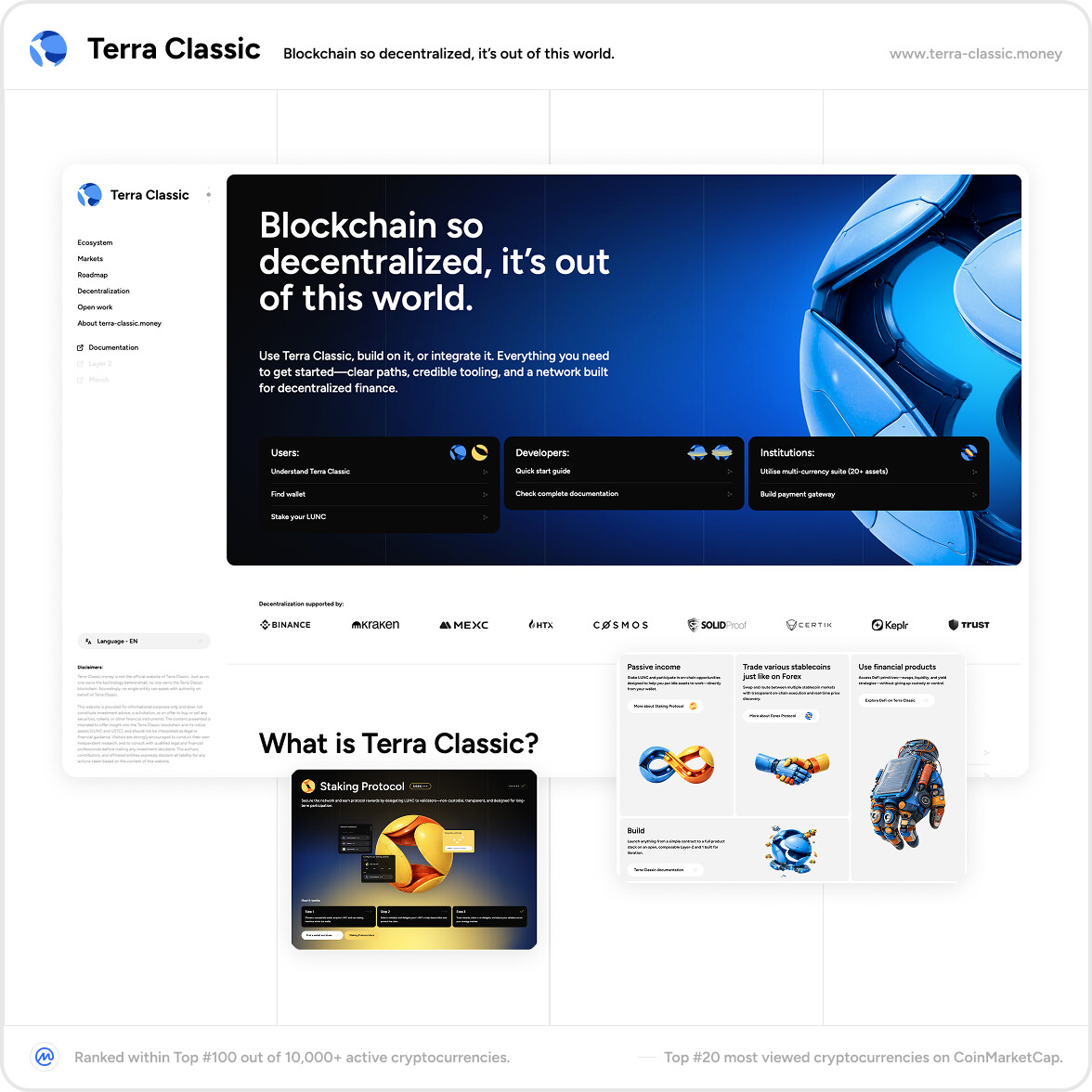
This is the v2 release of terra-classic.money: an independent, open-source, community-maintained website and documentation layer for Terra Classic.
Why this matters:
Since the May 2022 crash, Terra Classic has had a powerful community, active validators, real infrastructure, working applications, governance, staking, markets, and ongoing protocol work.
But it has not had a mature, professional, easy-to-navigate public information layer that presents the chain properly to new users, holders, builders, investors, institutions, media, and external observers.
That matters.
A decentralized blockchain still needs clear public infrastructure. People need to understand what Terra Classic is, what exists today, what is being built, what is experimental, where to find trusted resources, and how to contribute without relying on scattered links, old narratives, or validator-controlled information surfaces.
terra-classic.money v1 was once Terra Classic’s first governance approved website. v2 rebuilds that idea for the current chain: broader, clearer, more professional, open-source, contribution-ready, and built around long-term community usefulness.
Important governance note
terra-classic.money v2 is not currently the governance-selected official Terra Classic website.
It is an independent community-maintained website. If the Terra Classic community and governance later decide that it should become the official or primary public website, that should happen through the proper governance path.
This post is not a governance proposal. It is an announcement and an invitation to inspect, use, stress-test, correct, and improve the website.
What is live in v2
1. Professional brand and product presentation
The site gives Terra Classic a more serious public face. It explains what the chain is, what it enables, why LUNC and USTC matter, and how different audiences can start using or evaluating the ecosystem.
It is not just a link hub. It presents Terra Classic as a living Layer-1 ecosystem with users, builders, governance, applications, markets, documentation, and a recovery path.
2. Clear paths for different audiences
The homepage gives direct routes for users, builders, and institutions.
Users can find wallets, staking, markets, ecosystem resources, and basic explanations.
Builders can move toward docs, developer resources, open work, roadmap items, and infrastructure references.
Institutions and external observers can understand the chain, its assets, its governance model, and its public information sources without needing to decode community fragmentation first.
3. Terra Classic Docs
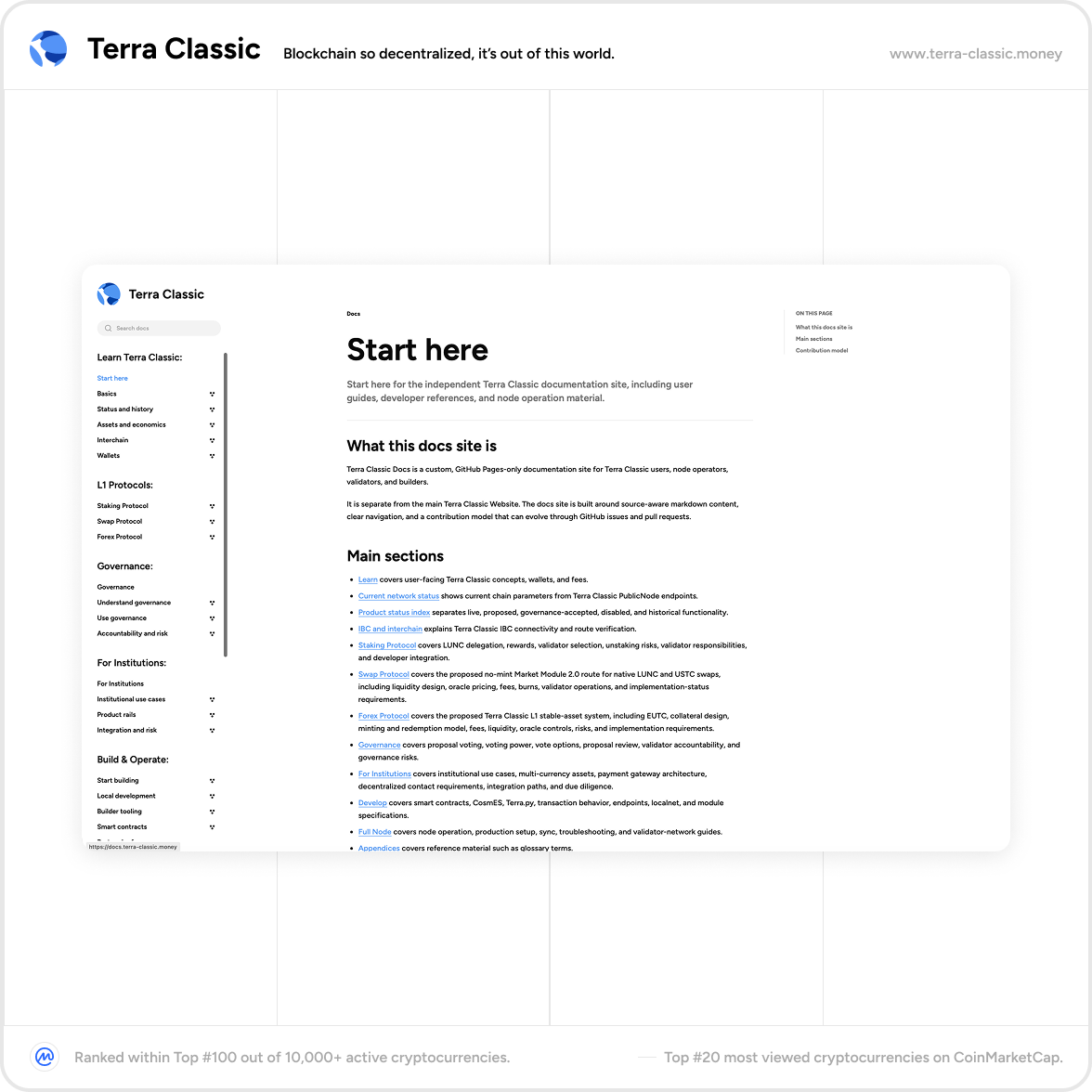
docs.terra-classic.money is now live as a richer documentation layer for Terra Classic.
It covers learning material, wallets, staking and governance, developer resources, endpoints, module specifications, smart contract material, full node operation, and other technical references.
The goal is simple: make Terra Classic easier to understand, easier to build on, and easier to verify.
4. Calls to action that lead somewhere useful
The website includes clear calls to action for staking, wallets, markets, ecosystem discovery, documentation, roadmap review, open work, contribution, and brand resources.
This is important because a public website should not only describe Terra Classic. It should help people take the next useful step.
5. Published language versions
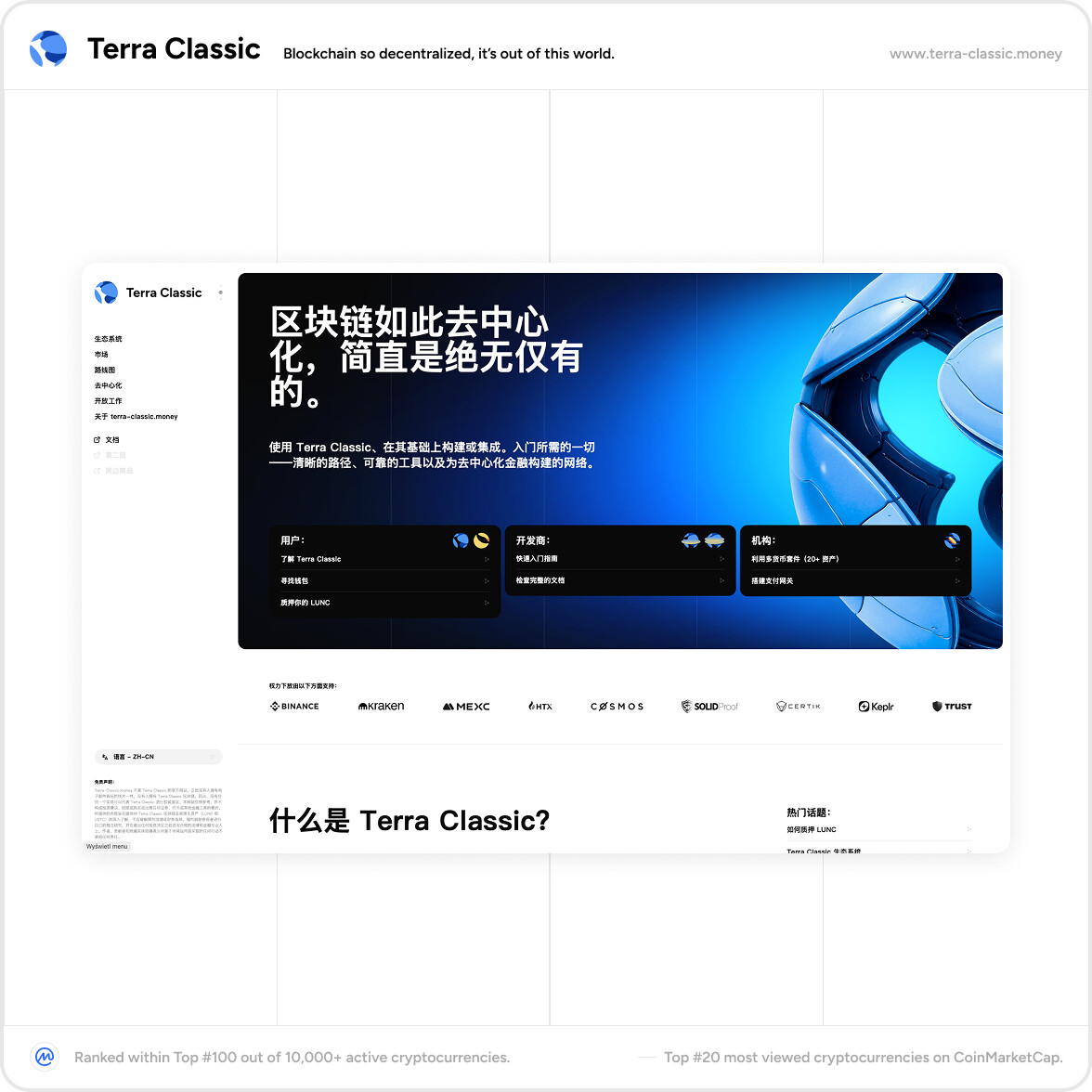
The website is live in:
English, Turkish, Indonesian, German, Hindi, Thai, Brazilian Portuguese, Simplified Chinese, and Polish.
Terra Classic is global. The public information layer should not be trapped inside one language bubble.
6. Ecosystem directory
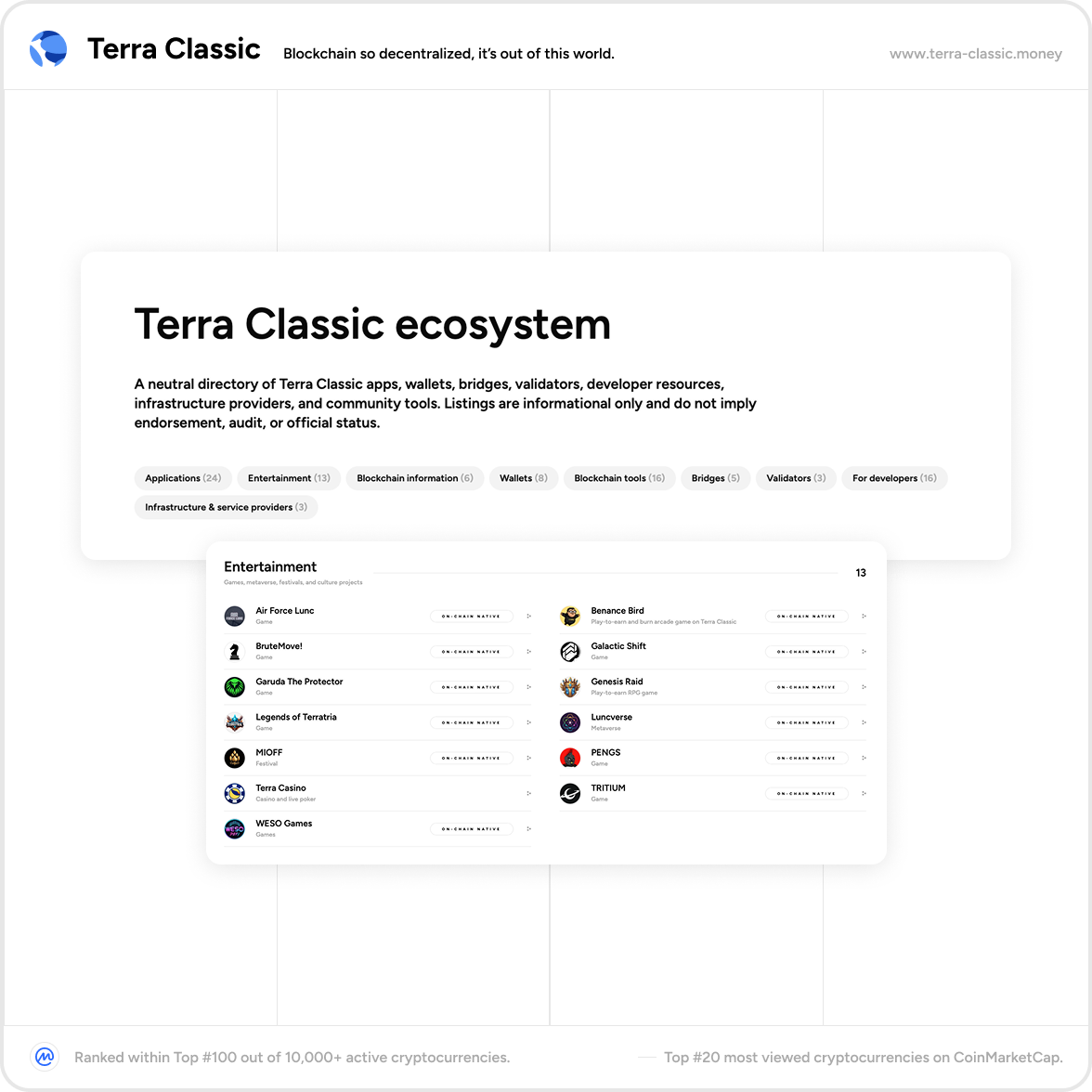
The Ecosystem page promotes projects, tools, wallets, bridges, infrastructure, validators, developer resources, and community utilities that provide real utility.
The goal is not to create a paid ranking platform or a hype directory. The goal is to help users discover what exists while keeping listings informational and neutral.
7. Markets page
The Markets page gives a broad CEX and DEX list for LUNC routes.
This helps users verify where market access exists and separates discovery from endorsement. A listed market is not a recommendation, investment signal, or safety guarantee.
8. Decentralization page
The website explains Terra Classic’s decentralization in plain language.
It covers the idea that Terra Classic is not controlled by one company, foundation, validator, or individual. Governance, validators, delegators, infrastructure, public contribution, and community coordination all matter.
This is a major part of Terra Classic’s story and should be explained better than slogans.
9. GitHub-based transparency
The website is built around public GitHub-based contribution.
That means corrections, content updates, listings, translation improvements, and future changes can be proposed through transparent workflows.
The intended model is independent community maintenance, not validator control.
10. Decentralized Roadmap
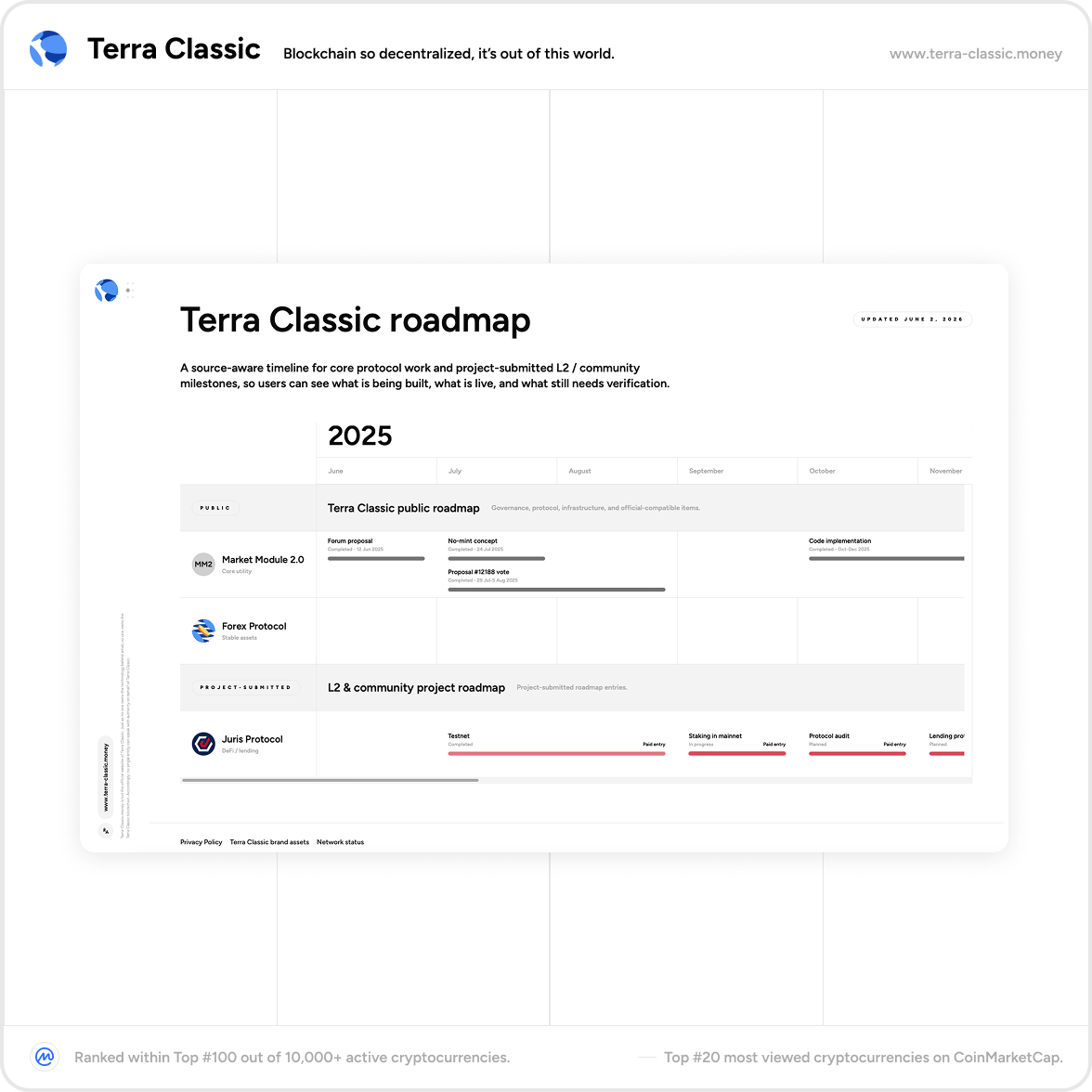
The Roadmap page shows what is being built, where initiatives stand, and whether items are public, governance-linked, or project-submitted.
This is one of the most important parts of the site because Terra Classic needs a clearer way to show progress without pretending that one centralized team owns the whole roadmap.
11. Open Work page
The Open Work page helps developers, dev teams, software houses, and technical contributors find concrete Terra Classic work that can be quoted, proposed, or built.
This is not just content. It is an attempt to turn ecosystem needs into visible work packages that outside teams can understand.
12. Terra Classic Brand Assets page
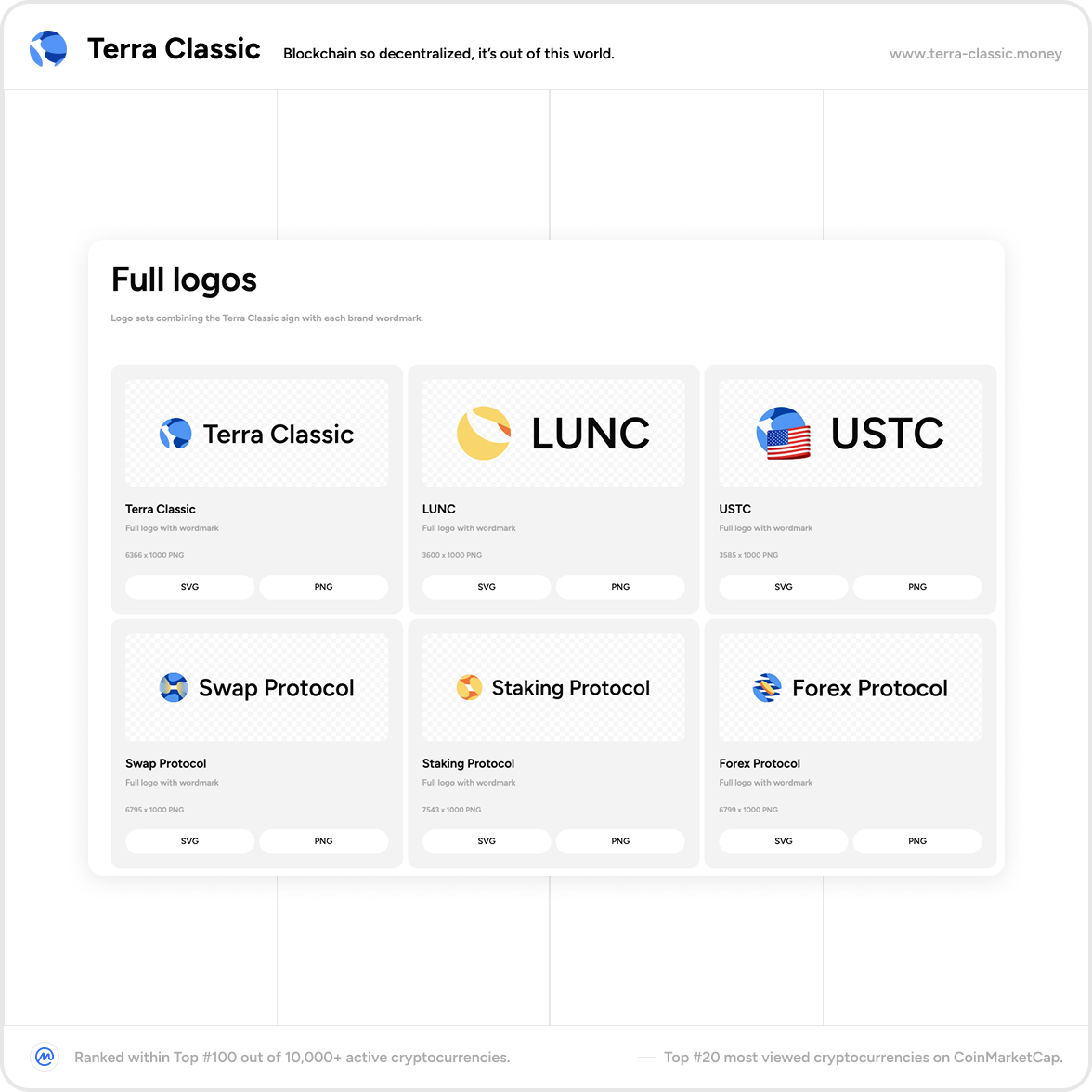
Terra Classic now has a dedicated Brand Assets page with logos, usage guidance, and public brand resources.
This matters because creators, media accounts, builders, projects, and community members need a consistent way to represent the chain without each person improvising from old or low-quality assets.
13. A broader Terra Classic narrative
The website does not focus only on burns.
There is nothing wrong with burns, but Terra Classic has more to offer: community governance, staking, low-cost development, fast blocks, interchain connectivity, DeFi routes, stable-asset ambition, active applications, public contribution, and one of the strongest recovery stories in crypto.
If Terra Classic wants to be taken seriously by users, builders, investors, and institutions, the public narrative needs to show the full picture.
14. Clear funding boundary
The website was built pro bono for the community, but serious maintenance takes time, research, design, development, translations, content updates, review, and operational work.
Future funding will be separated from the neutral main site.
Planned commercial or support surfaces such as l2.terra-classic.money and merch.terra-classic.money should exist on separate subdomains, not as paid influence inside the main public website.
The main website must stay neutral.
The core Ecosystem page should not be pay-to-play.
Paid L2 or merch-related surfaces should be clearly separated and labeled.
Neutrality is not a cosmetic detail. It is the condition that makes the site credible and potentially governance-compatible in the future.
What still needs work:
v2 is live, but not every part is finished.
Two areas especially need community help:
- the explainer video;
- founder stories.
Those need stronger source material, community input, and careful handling. I will ask for help with those in separate posts so the requests are specific and useful.
How the community can help
Please use the website, share it, inspect it, and stress-test it.
If something is wrong, outdated, missing, unclear, or unfairly represented, report it.
If a useful Terra Classic resource is missing, suggest it.
If a translation can be improved, contribute.
If a roadmap item needs correction or better sourcing, help improve it.
If a documentation page is wrong or incomplete, open an issue or propose a fix.
Terra Classic needs public infrastructure that the community can improve.
The goal is not to claim authority.
The goal is to build something useful enough, neutral enough, transparent enough, and professional enough that the community can decide what role it should play.
Enjoy. Dawid Skinder.