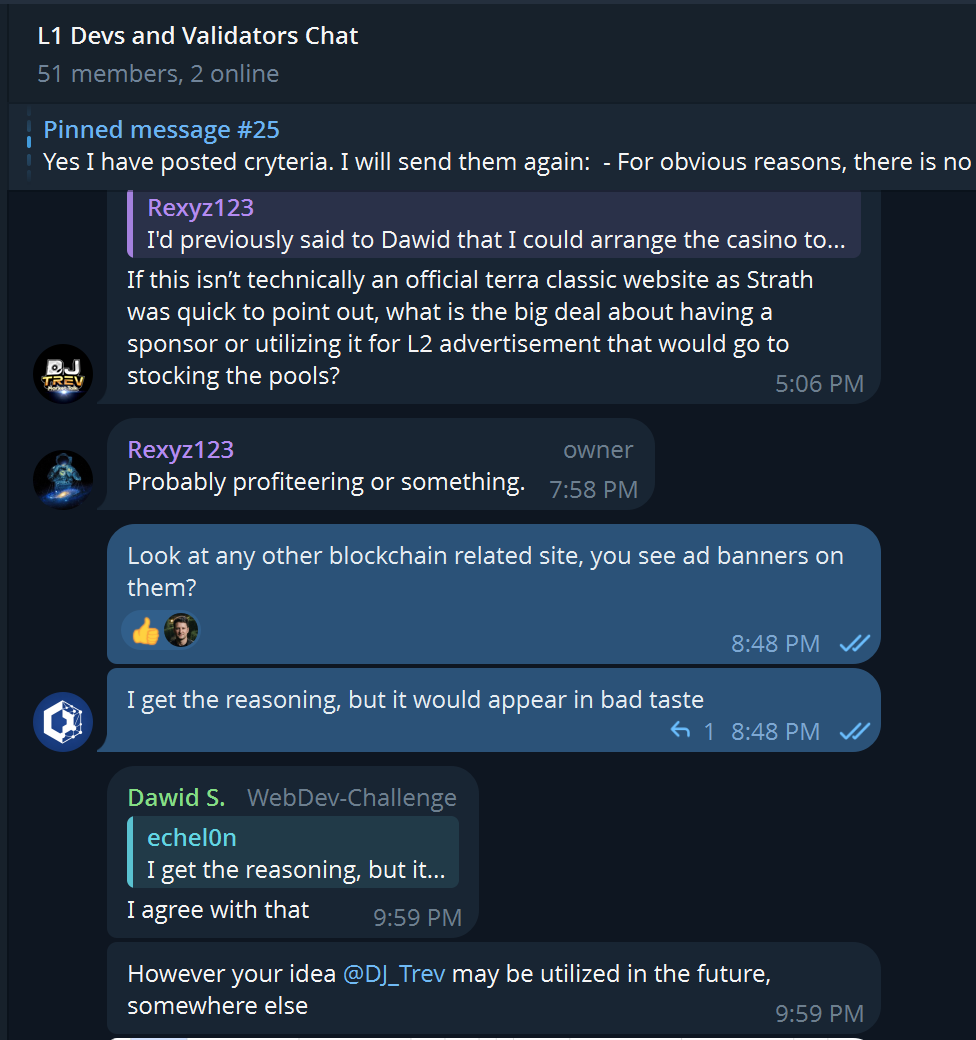
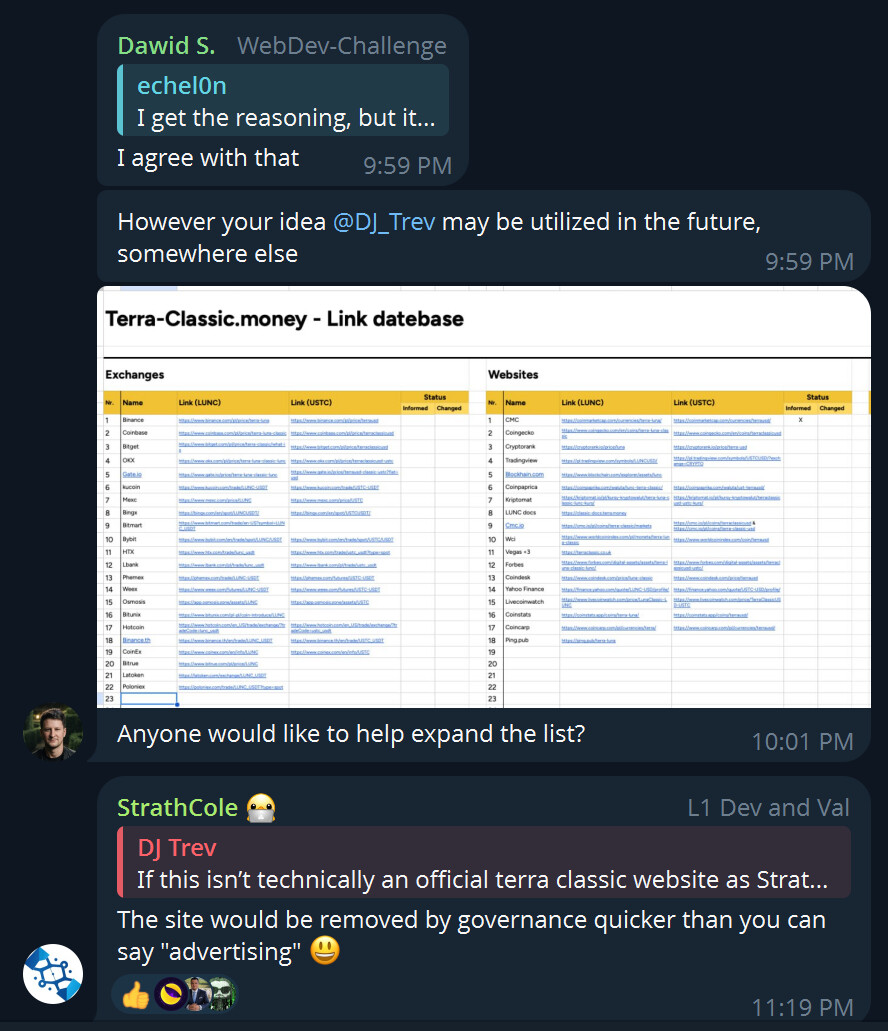
Adding to the points raised by @Bullboss5 and @LunaClassicNode.com :
1) Does switching to terra-classic.io actually reduce risk?
Not based on what is currently voter-visible.
Today, terra-classic.io is still ultimately controlled by the domain holder (domain custody = final control). In addition, the site’s change control is concentrated in a small maintainer group (5 people) who can approve/reject changes. “PRs are possible” but it up to those 5 maintainers if they are approved. It is not the same thing as decentralized control or guaranteed continuity.
By contrast, terra-classic.money now also has independent maintainer/reviewer group that includes non-validators (specifically to reduce validator incentive conflicts) and a public GitHub (workflow is in process of preparation right now).
So the “single point of failure / centralization” critique is not uniquely solved by switching domains. It simply shifts where the custody and gatekeeping sit.
2) What concrete positives does this proposal deliver vs today?
So far, the positives presented are essentially: “PRs exist” and “no donation visibility.” But:
- PRs ≠ decentralized control (they are a contribution mechanism, not a custody/continuity model).
- “No donations” is an optics preference, not a security model.
Meanwhile, switching the canonical link, apart of introducing critical centralization, also adds clear downside and risk:
- user/partner confusion and comms churn across third-party platforms
- SEO fragmentation (split authority between two competing “official” destinations)
- reputational noise for a change that does not clearly improve safety
- a UX/brand step backward relative to what Terra Classic needs for investor onboarding and ecosystem discovery